Constipation and tube feeding: what helps
Why constipation is common with a feeding tube and what helps — hydration, water flushes, gentle movement, and when to call your care team. For patients and caregivers.
Reviewed by the Lugano Health team
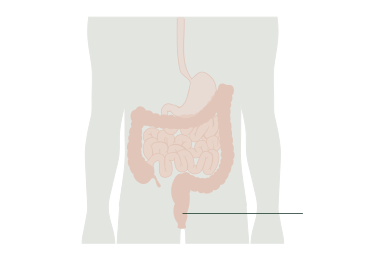
Constipation is common with tube feeding, often because of low fluids, low fiber, less movement, or certain medicines. The gentlest first steps are staying well hydrated with regular water flushes, moving your body when you can, and talking to your care team about fiber. Do not start new laxatives or other medicines on your own. Call your team if you go several days without a bowel movement, especially with belly pain, a swollen belly, or vomiting.
- Constipation on a feeding tube usually comes down to fluids, fiber, movement, and medicines — often fixable without medication.
- Staying well hydrated with regular water flushes is the single most helpful home step; ask your team how much water is right for you.
- Never start a new laxative, stool softener, or other medicine on your own — check with your care team or pharmacist first.
- No bowel movement for several days plus belly pain, a swollen belly, or vomiting means call your care team right away.
Constipation is one of the most common bumps in tube feeding — and one of the most manageable. Understanding why it happens makes the fixes feel a lot less mysterious, and most of the gentlest steps are things you can build into your day.
Why it happens
Several ordinary things can slow the bowels down when you're tube-fed:
- Not enough fluid. This is the big one. When your body is short on water, stool gets harder and slower to pass.
- Low fiber. Some formulas have little or no fiber, which can make stools firmer.
- Less movement. Being less active than usual — common during illness or recovery — slows the gut, too.
- Certain medicines. Some pain medicines and others can cause constipation as a side effect.
Often it's a mix of these, which is good news: small changes in a few places can add up.
Gentle things that help
These are the steps most teams start with. They're low-risk and worth building into your routine:
- Stay hydrated. Regular water flushes keep fluids up and stool softer. This is usually the most helpful home step.
- Keep moving when you can. Even gentle activity — a short walk, sitting up, light stretching — helps the gut get going.
- Ask about fiber. If your team agrees, a fiber-containing formula or a fiber supplement can help. Because fiber also needs plenty of water to work, let your team guide this rather than adding it yourself.
- Keep a rhythm. Regular feed and flush times help your body settle into a pattern.
Low fluid is the most common cause of constipation on a tube, so regular water flushes are usually the first thing to look at. The right amount depends on your health, your formula, and any fluid limits you have — so ask your care team how much water and how many flushes are right for you, rather than guessing. Don't over-flush without their okay.
What not to do
- Don't start new laxatives, stool softeners, enemas, or supplements on your own. Some aren't suitable for tubes, can cause clogs, or aren't right for your situation. Check with your care team or pharmacist first.
- Don't crush or add anything to the tube without asking your pharmacist — the wrong form can clog the tube or won't work as intended.
- Don't dramatically change your fluid or formula without your team, especially if you have a fluid limit for your heart or kidneys.
If you'd like a refresher on what's in your feeds, see Feeding tube formula, explained.
When to call your care team
Reach out to your team if:
- You've gone several days without a bowel movement, or it's a change from your usual pattern
- You have belly pain, cramping, or bloating that isn't easing
- You feel nausea or your feeds aren't going down as well
- Home steps like extra fluids and movement aren't helping after a few days
They can check your fluids, review your medicines, and recommend a safe next step made for your situation.
Get emergency help if
Call your care team urgently, or seek emergency care, if constipation comes with any of these — they can signal a more serious problem:
- A hard, swollen, or very painful belly
- Vomiting, especially if it looks or smells like stool
- No gas or stool passing at all along with pain and a swollen belly
When something feels wrong, it's always okay to call. Your team would far rather hear from you early. For the bigger picture on living well with a tube, start with Feeding tubes made simple.
Frequently asked questions
- Enteral nutrition — managing GI symptoms — American Society for Parenteral and Enteral Nutrition (ASPEN)
- Home tube feeding — everyday troubleshooting — The Oley Foundation
This article is educational and is not medical advice. Every person and every tube is different — always follow the instructions of your own care team, and call them (or emergency services) if something feels wrong.