Feeding tubes made simple: a plain-language guide
A calm, jargon-free introduction to feeding tubes — what they are, the main types, how daily care works, and where to get help. Written for patients and caregivers.
Reviewed by the Lugano Health team
A feeding tube is a soft, flexible tube that delivers nutrition, fluids, and medicine directly to your stomach or small intestine when eating by mouth isn't enough. Most day-to-day care comes down to a few repeatable routines: giving feeds, flushing with water, keeping the tube and skin clean, and knowing who to call when something looks off.
- A feeding tube carries food, fluids, and medicine straight to your digestive system — it does not change what your body does with that nutrition.
- The main types are named for where they go: nose (NG/NJ), stomach (G/PEG), or small intestine (J/GJ).
- Flushing with water before and after feeds and medicines is the single most important habit for keeping a tube working.
- Redness, leaking, a tube that won't flush, or pain are all reasons to call your care team — you're not overreacting.
Getting a feeding tube — or caring for someone who has one — can feel like being handed a new job with a five-minute training session. This guide is the calm, plain-language overview we wish everyone got on day one. No jargon, no scare tactics. Just what a feeding tube is, how the everyday parts work, and where to turn when you have a question.
What a feeding tube actually is
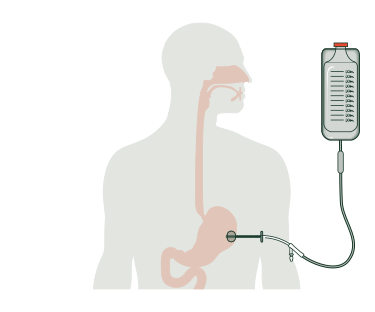
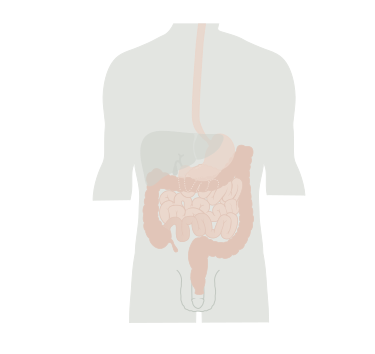
A feeding tube is a soft, flexible tube that carries nutrition, fluids, and medicine directly into your digestive system, so you can get what your body needs even when eating by mouth isn't enough or isn't safe.
That's the whole idea. The tube is a delivery route. Your stomach and intestines still do their normal work with the nutrition once it arrives — the tube just gets it there.
People use feeding tubes for many reasons: recovering from surgery or illness, difficulty swallowing, or a long-term condition that makes eating enough by mouth difficult. Some people use one for a few weeks; others for years.
The main types, without the alphabet soup
Feeding tubes are usually named for where they go. Once you know that, the letters make sense:
- NG / NJ tube — goes in through the nose down to the stomach (NG) or small intestine (NJ). Usually short-term.
- G tube / PEG — goes directly into the stomach through a small opening in the abdomen. Common for longer-term feeding.
- J tube — goes directly into the jejunum (part of the small intestine), used when the stomach needs to be bypassed.
- GJ tube — a combination that can reach both the stomach and the small intestine.
We cover the differences in plain language in Types of feeding tubes, explained — or read a dedicated guide to each: what is an NG tube?, what is a G tube?, and what is a PEG tube?.
What daily life actually involves
Most tube care comes down to a handful of repeatable routines:
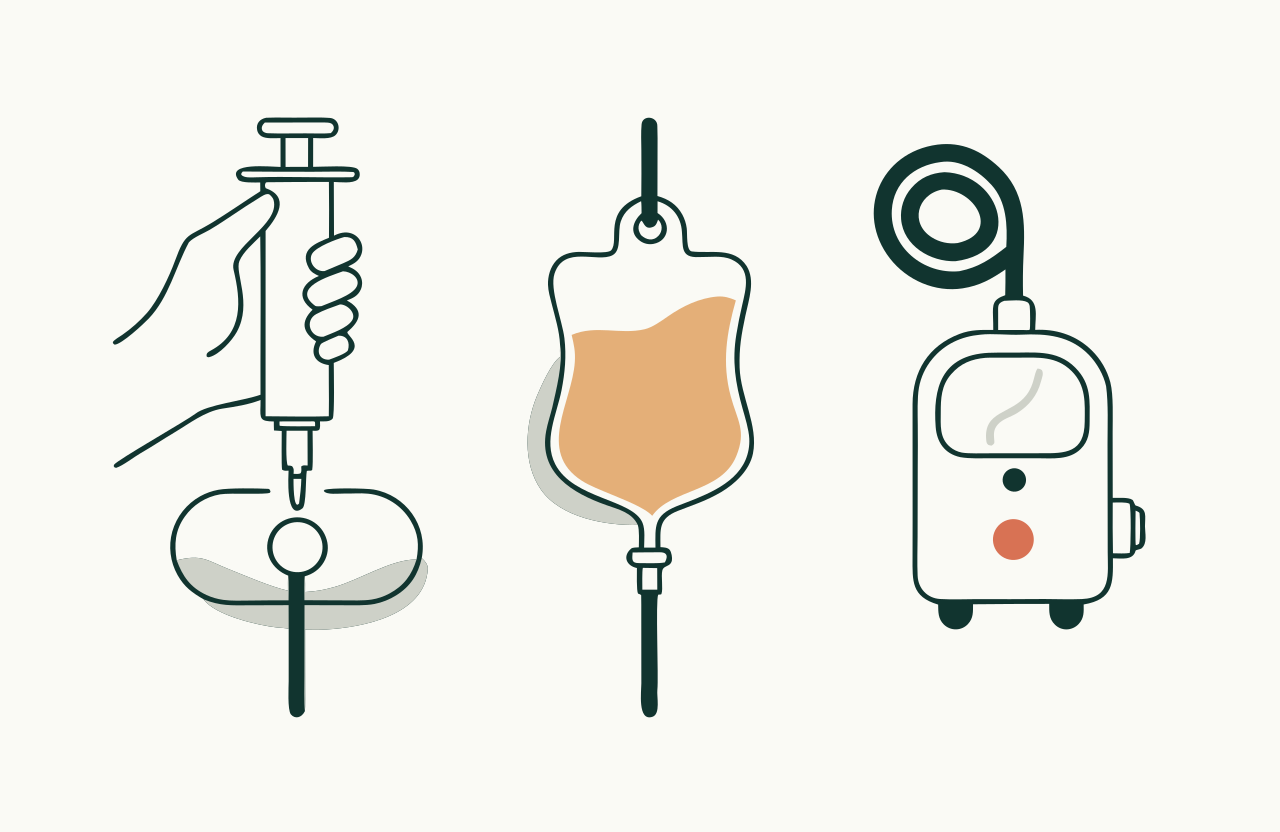
- Feeds — giving formula (or, for some people, a blended diet) on the schedule your team set, either by syringe, gravity bag, or a pump.
- Flushing — pushing a little water through the tube before and after feeds and medicines to keep it clear. This is the habit that prevents most clogs. See How to flush a feeding tube.
- Medicines — many medicines can go through the tube, but some need to be a liquid or specially prepared. Always check with your pharmacist or team before crushing anything.
- Site care — keeping the skin where the tube enters clean and dry, and watching for changes. See Caring for your feeding tube site.
None of these are complicated once you've done them a few times. The first week is the steepest part of the hill.
When to call your care team
You are never "bothering" your team by asking. Reach out if you notice:
- The tube won't flush, or you feel strong resistance
- Leaking around the tube, or the tube has moved or come out
- Redness, swelling, warmth, or new pain at the site
- Nausea, vomiting, or a swollen belly during or after feeds
- Anything that simply feels wrong
For a true emergency — a tube that has fully come out, trouble breathing, or severe pain — contact your care team urgently or call your local emergency number.
You've got this
Tube feeding is a real adjustment, and it's okay to find it hard. The good news is that it becomes routine faster than most people expect. Start with the basics, lean on your care team, and take it one feed at a time.
Frequently asked questions
- Tube Feeding at Home — patient resources — American Society for Parenteral and Enteral Nutrition (ASPEN)
- Education and peer support for home tube feeding — The Oley Foundation
This article is educational and is not medical advice. Every person and every tube is different — always follow the instructions of your own care team, and call them (or emergency services) if something feels wrong.