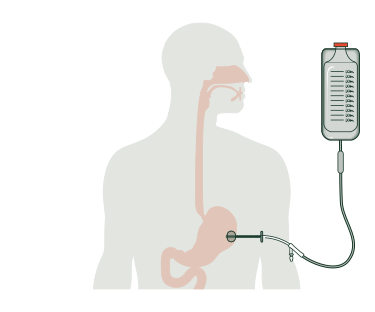
Checking residuals and venting your feeding tube
What checking residuals means, how to vent a feeding tube to ease gas and bloating, and why you should follow your care team's threshold — not a fixed number.
Reviewed by the Lugano Health team
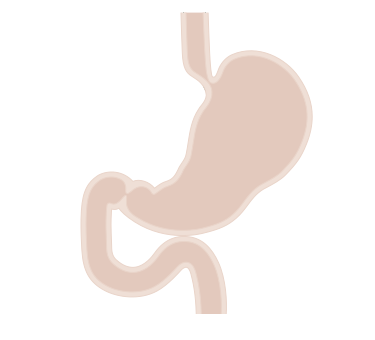
Checking a residual means gently drawing stomach contents back through the tube with a syringe to see how much is left before a feed — a rough check of how well the stomach is emptying. Venting means opening the tube to release trapped gas and pressure, which eases bloating. Practices and any residual numbers vary a lot, so always follow your own care team's instructions and threshold. Stop the feed and call your team if you have repeated large residuals, vomiting, or a hard, painful belly.
- A residual is stomach contents drawn back to check how well your stomach is emptying before a feed.
- Any residual number is informational only — follow your own care team's threshold, not a fixed rule.
- Venting releases trapped gas and pressure through the tube and can quickly ease bloating.
- Stop the feed and call your team for repeated large residuals, vomiting, or a hard, painful belly.
Two small skills can make tube feeding a lot more comfortable: checking residuals and venting. One helps you get a sense of how your stomach is handling feeds, and the other lets trapped gas escape so you feel less bloated. Neither is complicated — but both should follow your own care team's plan, because instructions really do vary from person to person.
What a residual is
A residual is what's still sitting in your stomach — leftover formula plus stomach fluid — when you check before a feed. To check it, you gently pull back on a syringe connected to the tube and see how much comes out. It's a rough snapshot of how well your stomach is emptying.
Not everyone checks residuals. Some care teams ask you to check routinely, some only when something feels off, and some don't ask you to check at all. Do what your team told you — there's no one right answer here.
How to check gently
If your team has asked you to check residuals:
- Wash your hands and pause the feed if one is running.
- Connect a syringe to the tube and pull back slowly and gently. Never yank.
- Note the amount you draw out.
- Return the contents if your team told you to, then flush and restart the feed per your plan. (Some teams say return it, some say discard — follow yours.)
Slow and gentle protects the tube and the stomach lining. If nothing comes back easily, don't force the plunger — repositioning or waiting a moment often helps.
There is no single residual amount that means "stop" for everyone. The right threshold depends on your body, your tube, and your care team's approach — and any number you read online is informational only. Always use the specific number and instructions your own care team gave you, and call them if you're unsure what your reading means.
What venting is
Venting means opening the tube to let trapped gas and pressure escape. Gas can build up in the stomach and cause bloating, pressure, gagging, or discomfort — venting gives it a way out.
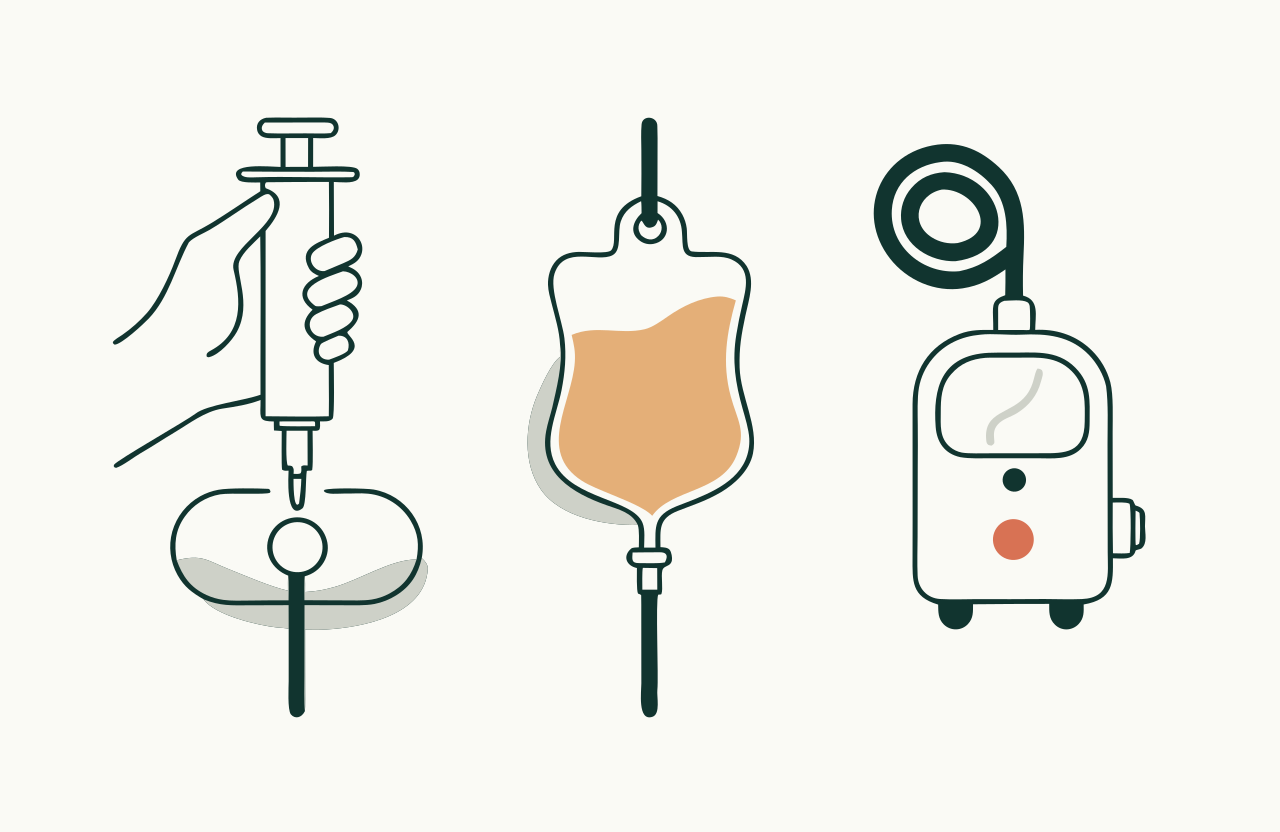
To vent, you typically connect an empty syringe (with the plunger removed) or a vent bag to the tube and let the gas rise up and out on its own. Many people feel relief within a minute or two. Your care team can show you the exact method for your tube and when it helps most — often before or between feeds, or any time you feel gassy and tight.
When residuals or symptoms mean stop and call
Pause the feed and contact your care team if you notice:
- Repeated large residuals above the threshold your team gave you
- Vomiting, gagging, or bringing feeds back up
- A hard, swollen, or painful belly
- Nausea that keeps building through a feed
- Feeds that consistently aren't tolerated, even after venting
These can be signs your stomach isn't emptying well, and your team may adjust your rate, timing, or plan. None of it means you did anything wrong — it's exactly the kind of thing your team wants to hear about early.
The one-line version
Check gently if your team asks you to, use their number not a fixed one, vent to ease gas, and call your team when feeds keep coming back or your belly is hard and sore. For the flushing that goes hand in hand with feeds, see How to flush a feeding tube, and for the bigger picture, Feeding tubes made simple.
Frequently asked questions
- Enteral nutrition tolerance and monitoring guidance — American Society for Parenteral and Enteral Nutrition (ASPEN)
- Home tube feeding — tolerance and comfort resources — The Oley Foundation
This article is educational and is not medical advice. Every person and every tube is different — always follow the instructions of your own care team, and call them (or emergency services) if something feels wrong.