How to flush a feeding tube, step by step
A simple, plain-language guide to flushing a feeding tube with water — when to do it, how much, and how to handle resistance — so your tube stays clear and working.
Reviewed by the Lugano Health team
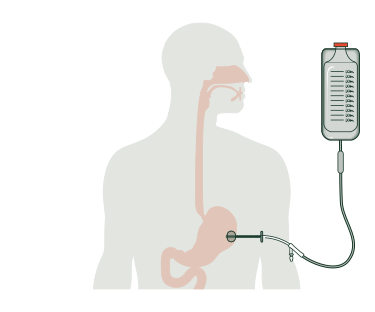
Flush your feeding tube with room-temperature water before and after every feed and every medicine, and once between medicines. Draw water into a syringe, connect it to the tube, and push gently. Use the amount your care team gave you (often around 30–60 mL / 1–2 oz for adults). Regular flushing is the best way to prevent clogs.
- Flush before and after feeds and medicines, and between each medicine — water only.
- Use room-temperature water and push gently; never force against strong resistance.
- Use the flush amount your care team gave you (commonly 30–60 mL / 1–2 oz for adults; less for children).
- If water won't go through, stop and try the clog steps — don't push harder.
Flushing sounds fancy, but it's just running a little water through the tube to keep it clear — like rinsing a straw so nothing dries inside it. It's the single most important habit for a tube that keeps working, and it takes under a minute once you're used to it.
When to flush
Flush your tube:
- Before and after every feed
- Before and after every medicine
- Between each medicine, if you're giving more than one
- Every few hours during a continuous (pump) feed, if your team asks you to
If your tube isn't being used for feeds, your team will usually still ask you to flush it once or twice a day so it doesn't sit unused and clog.
What you'll need
- A syringe (your team will tell you the size — often a 60 mL syringe)
- Water at room temperature — clean tap water for most adults, or sterile/cooled boiled water if your team advised it
- A clean surface and clean hands
Step by step
- Wash your hands and gather your syringe and water.
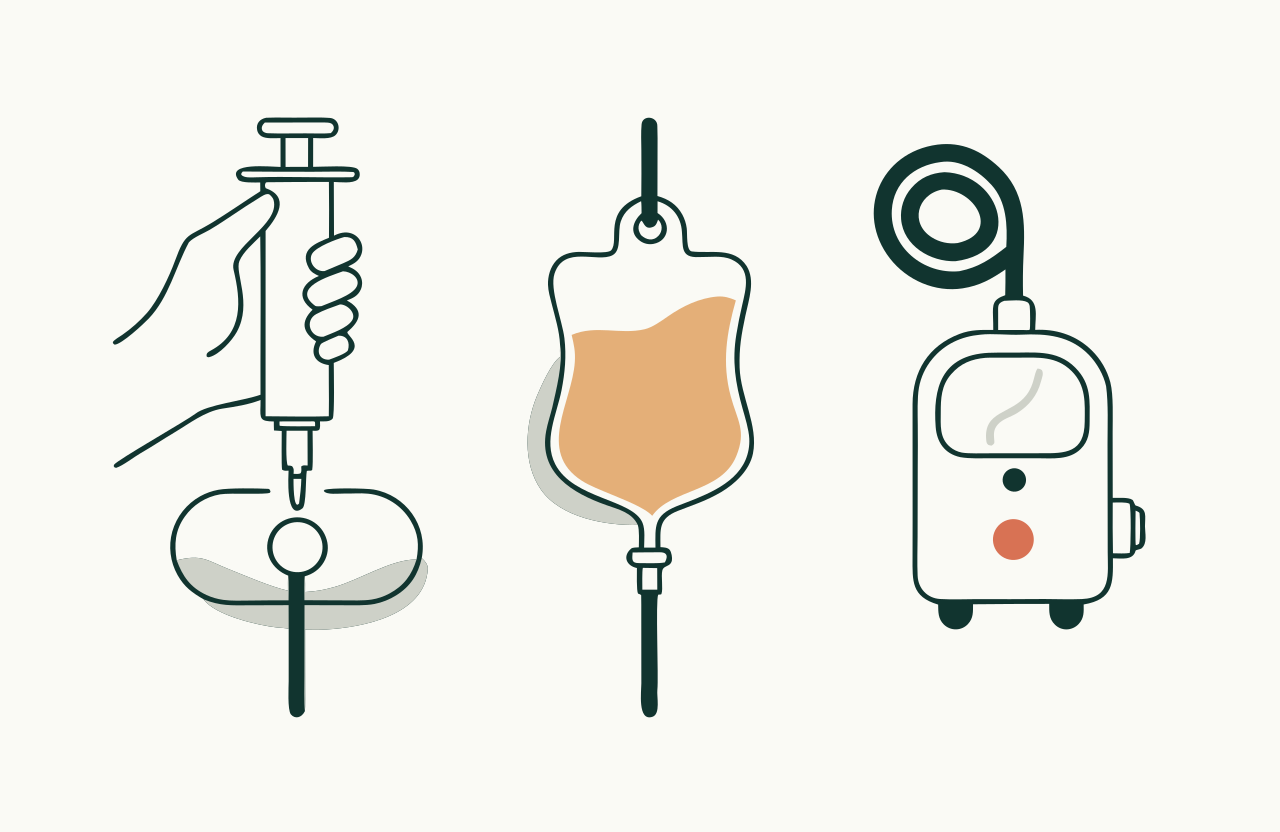
- Draw up the water — pull the amount your team gave you into the syringe (often around 30–60 mL / 1–2 oz for adults).
- Connect the syringe to the flush port on your tube.
- Push gently and steadily. The water should flow without much effort.
- Disconnect and cap the tube, and rinse your syringe with warm water so it's ready next time.
That's it. Slow and gentle beats fast and forceful every time.
Flushing, step by step
Wash your hands
Clean hands and a clean surface. Gather your syringe and water.
If you feel resistance
A little resistance can be normal, but never force it. Forcing can damage the tube. If water won't go through easily:
- Stop and reposition — sometimes sitting up or shifting slightly helps.
- Try a gentle push-and-pull with warm water in the syringe.
- If it still won't clear, move to the steps in Feeding tube clogged? How to fix and prevent it, and call your care team if it doesn't resolve.
A few habits that prevent 90% of problems
- Flush every single time — feeds and medicines, before and after.
- Water only. Juice, soda, and cranberry juice don't help and can make clogs worse.
- Prepare medicines properly — liquid forms when available, and always ask your pharmacist before crushing anything.
Get the flushing routine down and most tube troubles simply never happen.
Frequently asked questions
- Enteral nutrition — care and maintenance guidance — American Society for Parenteral and Enteral Nutrition (ASPEN)
- Feeding tube instructions for use — Device manufacturer IFU
This article is educational and is not medical advice. Every person and every tube is different — always follow the instructions of your own care team, and call them (or emergency services) if something feels wrong.