Caring for your feeding tube site (stoma), made simple
How to keep the skin around your feeding tube clean, dry, and healthy — what's normal, what granulation tissue is, and the signs that mean it's time to call your care team.
Reviewed by the Lugano Health team
Clean the skin around your feeding tube daily with warm water (and mild soap if your team advises), then pat it fully dry. A little clear or pale drainage can be normal at first. Call your care team for spreading redness, warmth, swelling, pus, a bad smell, bleeding, or bumpy pink-red tissue (granulation) around the site.
- Keep the site clean and — most importantly — dry; moisture causes most skin irritation.
- Clean daily with warm water; use mild soap or other products only if your team recommends them.
- Granulation tissue (moist, bumpy, pink-red skin around the site) is common and treatable — report it to your team.
- Spreading redness, warmth, pus, a bad smell, or fever can signal infection — call your care team.
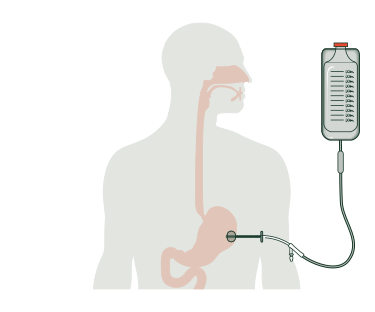
The little opening where your tube enters the body is called the stoma. Keeping the skin around it clean and dry is most of the job — and it only takes a minute a day.
The daily routine
- Wash your hands.
- Clean gently around the tube with warm water. Use mild soap only if your care team advised it. Clean outward, away from the opening.
- Rinse if you used soap.
- Pat completely dry. This is the most important step — moisture trapped against the skin causes most irritation.
- Leave it open to air when you can, and avoid heavy creams or powders unless your team recommends them.
If your tube has an external bumper or disc, your team will show you how to rotate or clean under it (for some tube types) to keep the area healthy.
What's normal
- A small amount of clear or pale drainage, especially in the early weeks
- Mild pinkness right at the opening
- The area gradually settling down as it heals
What to look for
A healthy site
Skin flat and close to its normal color, maybe a little clear moisture. Calm and settling down.
Worth a call
Spreading redness, swelling, pus, a bad smell, or bumpy pink-red tissue — check in with your care team.
Granulation tissue (very common)
Sometimes the body grows extra granulation tissue around the site — moist, bumpy, pink-to-red tissue that can catch on clothing and bleed a little. It looks alarming the first time, but it's common and treatable. Keep the area clean and dry and let your care team know — they can recommend treatment and rule out other causes.
When to call your care team
Reach out if you notice:
- Redness that is spreading, warmth, or increasing swelling
- Pus, a bad smell, or increasing pain
- Bleeding that doesn't stop, or a lot of new granulation tissue
- Persistent leaking, especially of stomach contents
- Fever or feeling unwell
None of these mean you did something wrong — skin around a tube site just needs a little attention, and your team would always rather hear from you early.
The one-line version
Clean it, dry it, watch it. Keep the skin dry, glance at the site each day, and call your team when something changes.
Frequently asked questions
- Stoma and enteral access site care — American Society for Parenteral and Enteral Nutrition (ASPEN)
- Skin and site care resources — The Oley Foundation
This article is educational and is not medical advice. Every person and every tube is different — always follow the instructions of your own care team, and call them (or emergency services) if something feels wrong.