Feeding tube clogged? How to fix it and prevent it
A calm, step-by-step guide to unclogging a feeding tube with warm water — plus what not to do, and the simple habits that stop clogs from happening in the first place.
Written from the clinical sources listed below · Updated November 3, 2026
On this page
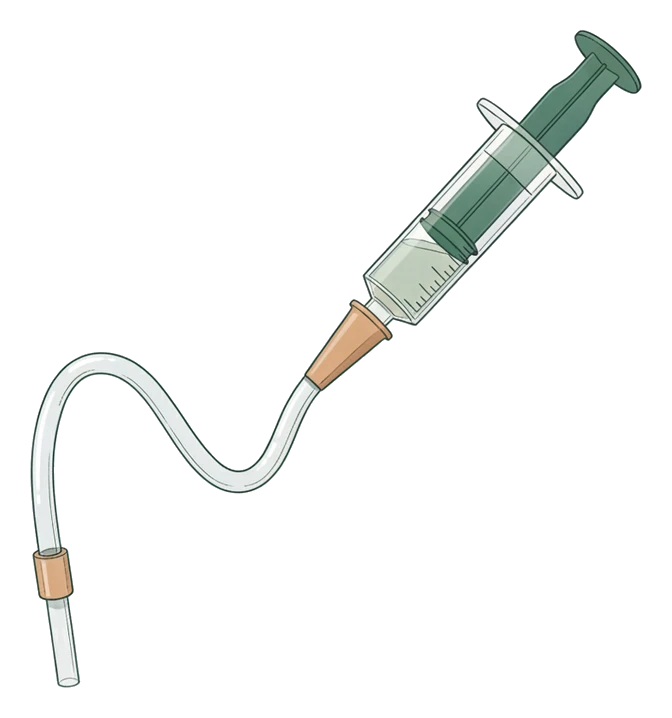
If your feeding tube is clogged, don't force it. Draw warm water into a syringe, connect it, and use a gentle push-and-pull motion to loosen the blockage, then let it sit for a few minutes and try again. Avoid soda, juice, and stylets or wires. If warm water doesn't clear it, call your care team — never push hard enough to risk damaging the tube.
- Warm water and a gentle push-pull with a syringe clears most clogs — patience beats force.
- Do NOT use soda, cranberry juice, or push a wire/stylet down the tube; these can harm the tube or make things worse.
- Let warm water dwell for 5–15 minutes, then try again before giving up.
- If it won't clear, call your care team — a clog is a common, fixable problem, not a failure.
A clogged tube is one of the most common bumps in tube feeding — and one of the most fixable. The key is to stay calm and be gentle. Most clogs clear with warm water and a little patience.
First: don't force it#
It's tempting to push harder when water won't go through. Please don't. Forcing a syringe against a blockage can split or damage the tube, which turns a small problem into a bigger one. Gentle and patient wins here.
How to clear a clog, step by step#
- Stop feeds and medicines through the tube for now.
- Draw warm (not hot) water into a syringe — the size your team recommends, often a 60 mL syringe.
- Connect and apply gentle pressure, then a soft push-and-pull motion — push a little, pull back a little. This helps break up the blockage without force.
- Let it dwell. If it won't move, leave the warm water in the tube for 5–15 minutes to soften the clog, then try the gentle push-pull again.
- Repeat once or twice. Many clogs give way on the second or third attempt.
If the tube clears, resume your normal flushing routine and watch that it's flowing freely.
Rocking the plunger loosens a clog; pushing hard only packs it tighter
What NOT to do#
- No soda or juice. Cola and cranberry juice are popular myths — they don't work better than warm water and can make clogs worse.
- No wires, stylets, or objects pushed down the tube (unless your team specifically trained you to). These can damage or puncture the tube.
- No extra force. If warm water and patience don't work, it's time to call, not push.
When to call your care team#
- Trouble breathing, or choking that doesn't clear when you stop
- Severe abdominal pain with a hard, rigid belly
- The clog won't clear after gentle warm-water attempts
- You can see leaking, a crack, or damage to the tube
- This tube is your only route for essential medicines
Work down this list — the first line that matches you is your answer:
Preventing the next one#
Clogs are far easier to prevent than to clear:
- Flush with water before and after every feed and every medicine.
- Flush between medicines so they don't combine into a paste.
- Use liquid medicines when available, and ask your pharmacist before crushing anything.
- Don't let formula sit in the tube between feeds.
Build the flushing habit (see How to flush a feeding tube) and clogs become rare.
Frequently asked questions
- Enteral access device care — troubleshooting — American Society for Parenteral and Enteral Nutrition (ASPEN)
- Home tube feeding troubleshooting — The Oley Foundation
This article is educational and is not medical advice. It is written from the published clinical sources listed above, not from your own chart. Every person and every tube is different — always follow the instructions of your own care team, and call them (or emergency services) if something feels wrong.