Your feeding tube fell out or moved: what to do now
A calm, step-by-step guide for when a feeding tube falls out or gets dislodged — why it's time-sensitive, what to do first, when to go to the ER, and how to prevent it happening again. For patients and caregivers.
Reviewed by the Lugano Health team
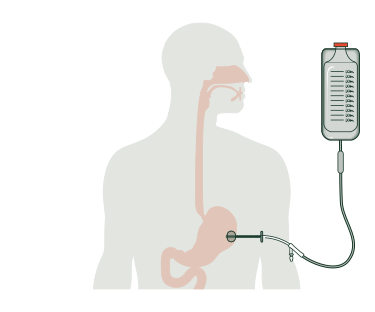
If a G or PEG tube falls out, treat it as time-sensitive: the opening (stoma) can begin to narrow within hours. Stay calm, note the time it came out, do not give any feed or medicine, and contact your care team right away. If your team has specifically trained you to reinsert your tube and given you a replacement, follow their exact instructions. If not — or if the tube is brand new, there's bleeding, pain, or trouble breathing — cover the site with clean gauze and get to the emergency room or call emergency services.
- A dislodged G/PEG tube is time-sensitive — the stoma can start closing within hours.
- Do not give feeds or medicine until placement is confirmed by your team.
- Only reinsert a tube yourself if your care team specifically trained you and gave you a spare.
- Trouble breathing, choking, severe pain, or heavy bleeding means call emergency services now.
First: take a breath. A feeding tube coming out is stressful, but it's a known situation with clear steps — and you can handle it. Here's exactly what to do.
Call for help now if any of these are true
Contact emergency services or go to the emergency room right away if:
- There is trouble breathing, choking, or coughing that won't stop
- There is heavy or uncontrolled bleeding from the site
- There is severe pain, a swollen or hard belly, or the person looks very unwell
- The tube is brand new (recently placed — the opening isn't established yet), and it has come out or been pulled
If none of those apply, follow the steps below and contact your care team promptly.
At a glance: what to do
Call 911 or go to the ER
- Trouble breathing, choking, or coughing that won't stop
- Heavy or uncontrolled bleeding at the site
- Severe pain, or a hard, swollen belly
- A brand-new tube (recently placed) that has come out
Call your care team right away
- An established tube has fully come out
- You can't get a replacement back in
- Leaking, or the tube looks out of position
Manage at home only if trained
- Your team trained you to reinsert your tube and gave you a spare
- The stoma is calm — no bleeding or severe pain
- You can confirm placement your team's way before using it
This is general guidance, not a diagnosis. When in doubt, treat it as urgent and call your care team or emergency services.
Why this is time-sensitive
For an established G or PEG tube, the opening in the skin (the stoma) can begin to narrow within a few hours once the tube is out. If it narrows too much, the same tube may not go back in — which is why a tube that has fully come out is handled promptly, not left until tomorrow.
What to do, step by step
- Stay calm and note the time. Write down when the tube came out — your care team will want to know.
- Do not give any feed, fluid, or medicine. Nothing goes in until placement is confirmed. Putting anything into a displaced tube or an open stoma can be harmful.
- Look at the site. A little leaking is common. Heavy bleeding, severe pain, or a hard, swollen belly means get emergency help now.
- Keep the tube. If it came all the way out, save it — the size and type help your team replace it correctly.
- Cover the site with a clean, dry gauze pad to keep it clean while you get help.
- Contact your care team right away for instructions specific to you.
If you've been trained to reinsert it
Many people who use a balloon-style G tube or button at home are trained by their team to replace it and given a spare. If that's you:
- Follow the exact steps your team taught you, using the replacement they provided.
- Confirm placement the way your team showed you before using the tube.
- Do not give a feed until placement is confirmed. If you're not certain it's in correctly, stop and call your team.
- If it won't go in easily, don't force it — cover the site and get medical help before the opening narrows.
If you have not been trained to reinsert your tube, this isn't the moment to try it for the first time. Cover the site and get help.
If it's an NG tube
An NG tube that has slipped or come out is usually less urgent than a stomach tube, but the rules still hold: don't push it back in yourself, and never give a feed through a tube whose placement hasn't been confirmed. A displaced NG tube can end up in the airway. Contact your care team for guidance.
Preventing it next time
- Keep the tube secured — a snug securement device or your team's taping method reduces snags and tugs.
- Mind the balloon (if you have one). Balloon-held tubes can deflate over time; your team will tell you how and when to check the water in the balloon.
- Watch for catches on clothing, seatbelts, bed rails, and little hands.
- Handle gently — never pull on the tube, and support it during transfers and dressing.
Good routines around the site help, too — see Caring for your feeding tube site.
This guide is educational and not a substitute for your care team's instructions. Because every tube and stoma is different, always follow the specific plan your team gave you, and call them (or emergency services) whenever something feels wrong.
Frequently asked questions
- Gastrostomy tube care and troubleshooting — patient resources — American Society for Parenteral and Enteral Nutrition (ASPEN)
- Home tube feeding — education and peer support — The Oley Foundation
This article is educational and is not medical advice. Every person and every tube is different — always follow the instructions of your own care team, and call them (or emergency services) if something feels wrong.