Feeding tube leaking? Why it happens and what to do
Why a feeding tube leaks around the site and what to do — simple skin protection, safe checks, and the signs that mean it's time to call your care team.
Reviewed by the Lugano Health team
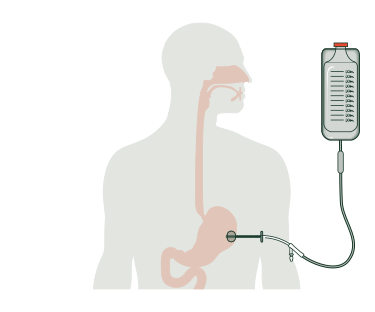
A little leaking around a feeding tube is common and usually has a fixable cause — an underinflated balloon, a tube that's loose or the wrong fit, granulation tissue, a stomach that needs venting, or a clog causing backflow. Keep the skin clean, dry, and protected, and check the balloon water only if your team trained you. Call your care team for skin breakdown, leaking stomach contents, pain, or a sudden increase — these often mean the tube needs adjustment.
- Some leaking is common and usually fixable — the goal is to find the cause and protect the skin, not to panic.
- Common causes: an underinflated balloon, a loose or wrong-size tube, granulation tissue, a stomach that needs venting, or a clog causing backflow.
- Keeping the skin clean, dry, and protected prevents most of the damage leaking can cause.
- Persistent leaks, leaking stomach contents, skin breakdown, or a sudden increase mean it's time to call your care team.
Finding fluid around your tube can be unsettling, but a bit of leaking is common — and it almost always has a specific, fixable cause. The two jobs are simple: figure out why it's happening, and protect the skin while you do.
Why tubes leak
Leaking around the site (rather than through the tube) usually comes from one of these:
- An underinflated balloon. Many G tubes are held in place by a small water-filled balloon. If it slowly loses water, the tube loosens and fluid can escape around it.
- A loose or wrong-size tube. If the tube is too loose or doesn't fit the stoma well, contents can seep around the edges.
- Granulation tissue. Moist, bumpy pink-red tissue at the site can change how the tube seals and contribute to leaking.
- A stomach that needs venting. Trapped gas or high pressure in the stomach can push fluid up and out around the tube.
- A clog causing backflow. If the tube is partly blocked, feed can back up and leak from the site instead of flowing through.
Simple, safe things you can do
- Keep the skin clean and dry. Gently clean around the site and pat it fully dry. Trapped moisture is what damages skin — see Caring for your feeding tube site.
- Protect the skin. Ask your team about a barrier product or the right absorbent dressing. Change dampened dressings promptly.
- Vent the tube — if you were taught how. If your team showed you how to vent or "burp" the stomach to release pressure, this can ease leaking driven by trapped gas.
- Check the balloon water — only with your team's guidance. If you have a balloon tube and your team trained you to check the water in the balloon, do it their exact way. Don't guess at amounts or over-inflate.
- Rule out a clog. If flow seems poor, a clog may be causing backflow. Warm water and a gentle push-pull clears most clogs — see how to fix a clog.
Leaking stomach contents can irritate and break down the skin around the tube quickly, so keep the area clean, dry, and protected, and change damp dressings promptly. Don't just wipe and carry on day after day: a leak that keeps happening usually means the tube needs professional adjustment, so let your care team know rather than waiting for the skin to suffer.
When to call your care team
Reach out if you notice:
- Skin breakdown — redness, rawness, sores, or peeling around the site
- Leaking of stomach contents (green, yellow, or foul-smelling fluid), not just clear drainage
- A sudden increase in how much is leaking, or leaking that's new
- Pain, spreading redness, warmth, swelling, or fever, which can signal infection
- Leaking that isn't improving with the simple steps above
Your team can check the balloon, the tube size and fit, and the site itself, and adjust or replace the tube if needed. This is routine — they handle it often.
Get emergency help if
Seek emergency care, or call your care team urgently, if leaking comes with:
- Trouble breathing, choking, or coughing during or after feeds
- Severe belly pain or a hard, swollen belly
- Heavy bleeding from the site
When in doubt, it's always okay to call. For the bigger picture, start with Feeding tubes made simple.
Frequently asked questions
- Enteral access site and stoma care — American Society for Parenteral and Enteral Nutrition (ASPEN)
- Home tube feeding — troubleshooting and skin care — The Oley Foundation
This article is educational and is not medical advice. Every person and every tube is different — always follow the instructions of your own care team, and call them (or emergency services) if something feels wrong.