Getting an NG tube: what to expect
What to expect getting an NG tube — no surgery, how it's passed through the nose, why placement is confirmed before use, and what it feels like.
Reviewed by the Lugano Health team
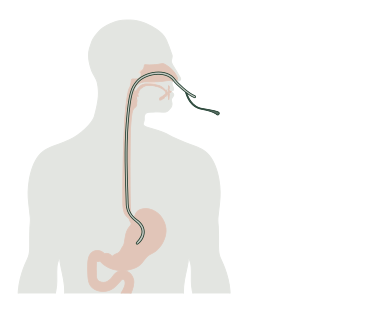
Getting an NG tube is not surgery. A thin, soft tube is passed through your nose, down the back of your throat, and into your stomach — it takes only a few minutes. There's brief discomfort as it goes down, and before it's used for feeds or medicine the team confirms it's in the right place, usually with an X-ray or a pH test. NG tubes are most often used for shorter-term feeding.
- No surgery — the tube is passed through the nose, and it takes only a few minutes.
- Placement is always confirmed (X-ray or pH test) before anything is given through it.
- Expect brief discomfort and some watering eyes; it usually eases once the tube settles.
- NG tubes are typically for shorter-term feeding, days to a few weeks.
If you're about to get an NG tube — or you're helping someone who is — the anticipation is often the hardest part. The procedure itself is quick, there's no surgery, and knowing what happens makes it far more manageable.
What an NG tube is
NG stands for nasogastric — nose to stomach. It's a thin, soft tube that runs through one nostril, down the back of the throat, and into the stomach, so nutrition, fluids, and medicine can be given when eating by mouth isn't enough. For the full picture, see What is an NG tube?.
No surgery involved
Unlike a G or PEG tube, an NG tube isn't placed with a procedure or an incision. It's simply passed through the nose at the bedside, usually by a nurse, and it takes only a few minutes. Nothing is cut, and there's no sedation for the placement itself. Because it's so straightforward, an NG tube can be placed quickly when someone needs support with feeds or medicine sooner rather than later.
What it feels like as it goes in
Here's the honest version, so nothing catches you off guard:
- You'll feel the tube at the back of your throat, and you may gag for a moment.
- Your eyes may water — that's a normal reflex, not crying.
- If your team allows it, sipping water as the tube passes can help it go down smoothly.
- Slow, steady breathing through your mouth helps you relax.
The most uncomfortable stretch is usually over in under a minute. Once the tube is in place and taped, most people find the sensation fades.
Placement is confirmed before it's used
This is the most important part to understand.
An NG tube must sit in the stomach, not the airway. Before any feed or medicine, your team confirms the tube is in the right place — usually with an X-ray or by testing the pH of fluid drawn back through it. This safety check protects your lungs.
Placement may also be re-checked before later feeds, since tubes can shift. If you're caring for someone at home, your team will show you exactly how they want placement confirmed each time — never give a feed through a tube whose position you're unsure of.
Living with an NG tube
Once it's settled, the tube is taped to your cheek to hold it steady. A few things help day to day:
- Keep the tape secure and let your team know if it loosens.
- Handle the tube gently and be mindful of catching it on clothing or bedding.
- Expect the first day to feel the strangest; most people adjust within a day or two.
NG tubes are usually short-term — days to a few weeks. If feeding is needed longer, your team may discuss a more durable option with you, such as a G or PEG tube. That conversation is about what's most comfortable and reliable over time, and it's always yours to be part of.
When to call your care team
Get help promptly if you notice:
- Coughing, choking, or trouble breathing — treat this as urgent
- The tube looks longer than before, has moved, or has come out
- Nose or throat pain, sores, or bleeding
- Nausea, vomiting, or a swollen belly during or after feeds
When in doubt, stop and call. New to all of this? Start with Feeding tubes made simple.
Frequently asked questions
- Enteral nutrition — care and safety guidance — American Society for Parenteral and Enteral Nutrition (ASPEN)
- Home tube feeding — education and peer support — The Oley Foundation
This article is educational and is not medical advice. Every person and every tube is different — always follow the instructions of your own care team, and call them (or emergency services) if something feels wrong.