What is an NG tube? (nasogastric tube, explained)
A plain-language explanation of NG (nasogastric) tubes — what they are, what they're used for, how placement is checked, and what daily life with one is like. For patients and caregivers.
Reviewed by the Lugano Health team
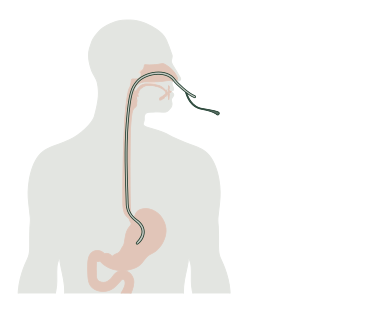
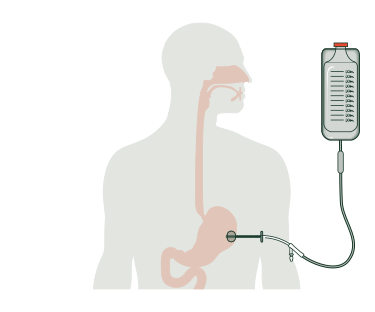
An NG (nasogastric) tube is a thin, soft feeding tube that goes in through the nose, down the back of the throat, and into the stomach. It's used to give nutrition, fluids, and medicine — and sometimes to drain the stomach — usually for the short term, such as during a hospital stay or a recovery period. Because it doesn't need surgery, it can be placed and removed easily.
- NG stands for nasogastric: nose to stomach. The tube goes in through the nose, not through the abdomen.
- It's typically a short-term option — during illness, recovery, or while a longer-term plan is decided.
- Placement is checked before use (often by X-ray or a pH test) to confirm the tip is in the stomach, not the lungs.
- It can feel odd at first, especially in the throat, but this usually eases within a day or two.
If you or someone you love has a soft tube taped to the cheek and running into the nose, that is almost certainly an NG tube. Here's what it is, in plain language — no alarm, no jargon.
What "NG" means
NG stands for nasogastric — literally nose to stomach. The tube goes in through the nose, down the back of the throat, past the esophagus, and rests in the stomach.
That's the whole idea packed into two letters: it's a feeding tube that reaches the stomach by way of the nose, instead of through an opening in the abdomen.
What an NG tube is used for
An NG tube can be used to:
- Give nutrition, fluids, and medicine when eating by mouth isn't enough or isn't safe.
- Drain or "vent" the stomach — the tube can also work in reverse to relieve pressure, for example during a bowel obstruction.
Because it can be placed without surgery, an NG tube is often the short-term choice — during a hospital stay, an illness, or a recovery period, or while a longer-term feeding plan is being decided.
Why placement gets checked
Before an NG tube is used, the team confirms it's in the right place — usually with an X-ray, or by testing the pH of a little fluid drawn back through the tube. This step matters: it makes sure the tip is sitting in the stomach and not in the airway.
In the hospital, staff handle this. If an NG tube is used at home, your care team will teach you exactly how they want you to check placement before each use — follow their method precisely, and call them if you're ever unsure.
What it feels like
An NG tube can feel strange at first — a bit of pressure or a tickle in the throat is common, especially in the first day or two. Most people find it settles and becomes much easier to ignore. Because the tube is visible and taped to the face, some people feel self-conscious; that's completely understandable, and it usually fades as it becomes routine.
Simple things help: keeping the tape clean and secure, sipping water if you're allowed to, and telling your team if the tube feels like it's rubbing or has shifted.
Short-term vs longer-term
If tube feeding is likely to be needed for more than a few weeks, your care team may talk with you about a tube that goes directly into the stomach — a G or PEG tube — which many people find more comfortable long term. See Types of feeding tubes explained and What is a PEG tube?.
When to call your care team
Reach out if you notice:
- The tube looks longer than usual, has slipped, or has come out
- Coughing, choking, or trouble breathing during or after a feed — stop the feed and get help
- Leaking, or the tube won't flush
- Soreness where the tube rests against the nose, or a nosebleed
Coughing or breathing trouble around feeds is an urgent sign — pause, and contact your care team or emergency services right away. When in doubt, it's always okay to ask.
New here? Feeding tubes made simple walks through the whole picture calmly.
Frequently asked questions
- Enteral access and tube feeding — patient resources — American Society for Parenteral and Enteral Nutrition (ASPEN)
- Education and peer support for home tube feeding — The Oley Foundation
This article is educational and is not medical advice. Every person and every tube is different — always follow the instructions of your own care team, and call them (or emergency services) if something feels wrong.