What is a PEG tube? A plain-language explanation
A calm, jargon-free explanation of PEG tubes — what PEG stands for, what the tube does, how it's placed, and how a PEG tube differs from a regular G tube. Written for patients and caregivers.
Reviewed by the Lugano Health team
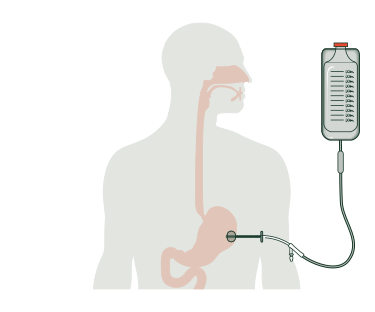
A PEG tube is a feeding tube that goes directly into your stomach through a small opening in your abdomen. PEG stands for percutaneous endoscopic gastrostomy — a description of how it's placed, using a thin camera (endoscope) through the mouth to guide it. Because it delivers nutrition straight to the stomach, a PEG tube is a type of G (gastrostomy) tube, and it's commonly used when someone needs tube feeding for more than a few weeks.
- PEG stands for percutaneous endoscopic gastrostomy — it names how the tube is placed, not a different destination.
- A PEG tube is a type of G tube: both deliver food, fluids, and medicine directly into the stomach.
- It's usually chosen for longer-term feeding and is placed in a short procedure, often with light sedation.
- Day-to-day care is mostly flushing, site care, and knowing who to call — the same routines as any G tube.
If someone has just said the words "PEG tube" and your head is spinning, take a breath. It's a lot less complicated than it sounds — and by the end of this page, the name itself will make sense.
What "PEG" actually stands for
PEG stands for percutaneous endoscopic gastrostomy. That's a mouthful, so here's the translation:
- Percutaneous — through the skin.
- Endoscopic — placed with the help of a small camera (an endoscope).
- Gastrostomy — an opening into the stomach.
Put together: a PEG tube is a feeding tube placed through the skin into the stomach, using a small camera to guide it. The fancy name is really just a description of how the tube gets where it's going.
What a PEG tube does
A PEG tube gives you a direct route to deliver nutrition, fluids, and medicine into your stomach, so you can get what your body needs even when eating by mouth isn't enough or isn't safe.
Your stomach and intestines still do their normal work once the nutrition arrives. The tube is simply the delivery path — it doesn't change how your body uses food.
Is a PEG tube the same as a "G tube"?
Almost. A PEG tube is a type of G (gastrostomy) tube. Both deliver food straight into the stomach; the difference is only in how the tube was placed. Because of that, many people — and even many clinicians — use "PEG" and "G tube" interchangeably in everyday conversation.
If you want the full breakdown, see PEG tube vs G tube: what's the actual difference? and What is a G tube?.
How it's placed
A PEG is usually placed during a short procedure with light sedation. A doctor passes a thin, flexible camera down through your mouth to your stomach, then makes a small opening in the abdomen and guides the tube into place. It typically takes well under an hour, and many people go home the same day or the next.
There's often some soreness around the site for a few days afterward — that's normal, and your team can help you stay comfortable while it settles.
Living with a PEG tube
For most people, day-to-day life with a PEG tube comes down to a few repeatable routines:
- Feeds — formula (or, for some people, a blended diet) given by syringe, gravity bag, or pump on your team's schedule.
- Flushing — a little water before and after feeds and medicines to keep the tube clear. See How to flush a feeding tube.
- Site care — keeping the skin where the tube enters clean and dry. See Caring for your feeding tube site.
A PEG tube tucks under clothing, so many people find it easier to live with than a tube that sits on the face. Plenty of people work, travel, and go about normal life with one.
When to call your care team
Reach out if you notice:
- The tube won't flush or you feel strong resistance
- Leaking around the tube, or the tube has moved or come out
- Redness, swelling, warmth, or new pain at the site
- Nausea, vomiting, or a swollen belly during or after feeds
If the tube has completely fallen out, treat it as time-sensitive — see Your feeding tube fell out or moved: what to do now.
New to all of this? Start with Feeding tubes made simple. You'll get the hang of a PEG tube faster than you expect.
Frequently asked questions
- Tube feeding at home — patient resources — American Society for Parenteral and Enteral Nutrition (ASPEN)
- Education and peer support for home tube feeding — The Oley Foundation
This article is educational and is not medical advice. Every person and every tube is different — always follow the instructions of your own care team, and call them (or emergency services) if something feels wrong.