Feeding tube supplies: what you actually need
A friendly, plain-language feeding tube supplies checklist — syringes, extension sets, pump or gravity bags, flushing water, site care, and go-bag spares.
Reviewed by the Lugano Health team

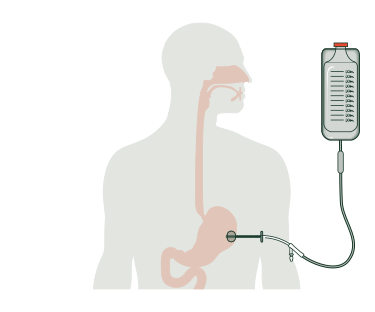
The core feeding tube supplies fall into a few groups: feeding (syringes, extension sets, and either gravity bags or a pump with pump bags), flushing (syringes and clean water), site care (gauze, mild soap, securement), and medicine supplies. Add a small stash of spares and a go-bag for outings. Your care team and supplier arrange most supplies, often through insurance, and modern connectors follow the ENFit safety standard.
- Supplies group neatly by purpose: feeding, flushing, site care, meds, and spares.
- You'll need syringes, extension sets, and either gravity bags or a pump with bags.
- Most supplies come through your care team and supplier, often covered by insurance.
- Keep spares and a small go-bag, and check that connectors follow the ENFit standard.
The pile of boxes that shows up in the early days can feel overwhelming. It helps to stop thinking of it as "a mountain of supplies" and start thinking of it as a few small kits, each with one job. Here's the friendly version, grouped by purpose.
For feeding
This is the heart of your kit — how nutrition actually gets in:
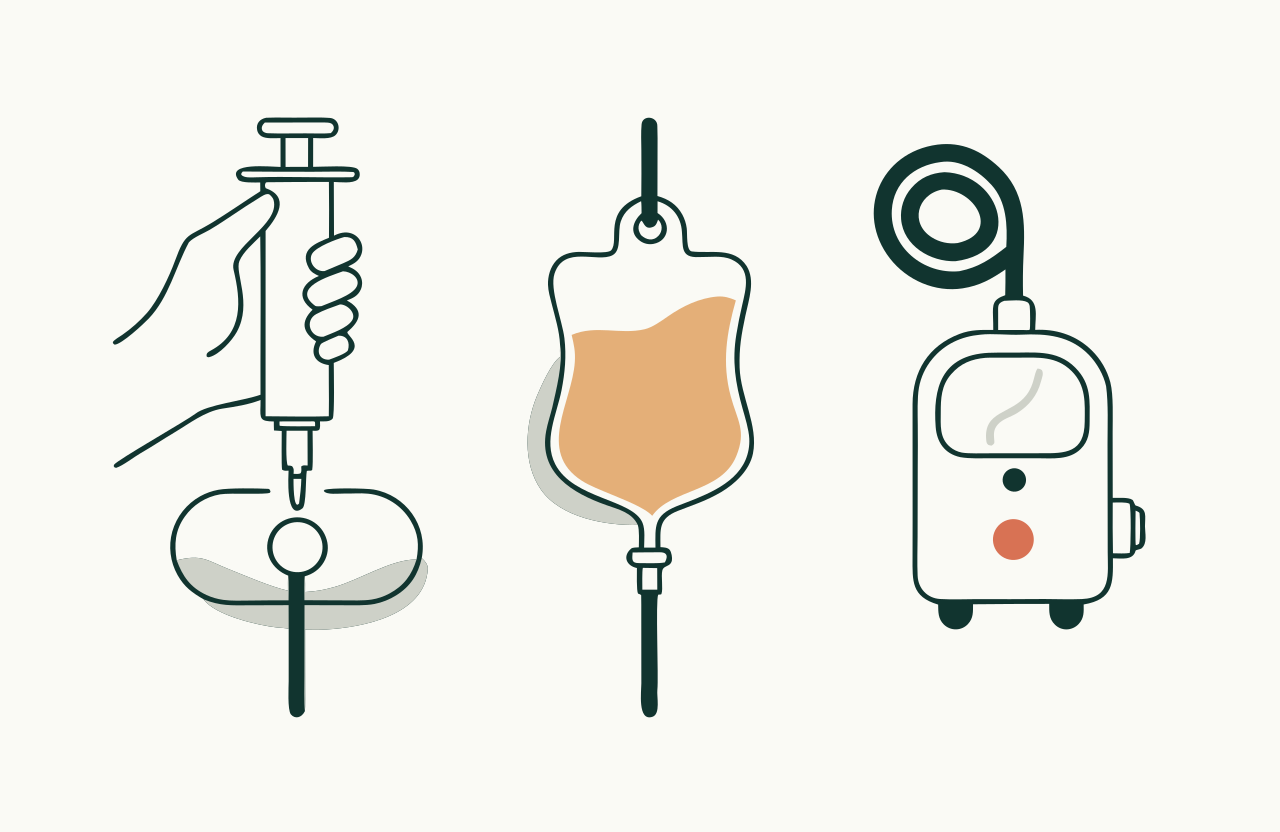
- Syringes — for bolus (syringe) feeds and for measuring. A 60 mL syringe is a common size; your team will tell you which to use.
- Extension sets — if you have a low-profile button, you connect one of these to feed. See Low-profile feeding tube buttons, explained.
- Gravity bags — for gravity feeds that drip in on their own, no machine needed.
- A feeding pump and pump bags — if you feed by pump, you'll have the pump plus its matched bag/set for each feed.
You'll use one feeding method most of the time, so you won't need all of these — your care team sets your method and schedule.
For flushing
Flushing keeps the tube clear and is one of the most important daily habits:
- Syringes — a clean syringe for drawing up and pushing water.
- Clean water — for flushes before and after feeds and medicines. Your team will tell you what water to use and roughly how much (measured amounts are usually given in ounces, with the mL equivalent, for example about 1 oz / 30 mL). See How to flush a feeding tube.
For site care
Keeping the skin around your stoma clean and dry prevents most site problems:
- Gauze or split-drain sponges — for cushioning or absorbing small amounts of leakage.
- Mild soap and clean water — for gentle daily cleaning.
- Securement — a tube-holder, tape, or clip to stop the tube tugging or catching.
See Caring for your feeding tube site for the how-to.
For medicines
If you give medicine through the tube:
- Liquid medicines where possible — they're less likely to clog the tube.
- A dedicated syringe — for drawing up and giving meds, kept separate and clean.
- Water — to flush before and after each medicine so nothing is left sitting in the tube.
Always check with your pharmacist or care team before crushing anything — not every pill is safe to give this way.
Storage and spares
- A clear, clean spot to store formula and supplies, out of direct heat and sunlight.
- A running list of what you use, so you reorder before you run out.
- Spares of the small things — extra syringes, an extra extension set, extra securement. The item that fails is always the one you didn't have a backup for.
A go-bag
Pack a small go-bag with a couple of syringes, an extension set (if you use one), water for flushing, and a spare securement. Then a delayed appointment or an unexpected outing never means a missed flush or feed.
Where supplies come from
You usually won't be buying most of this off a shelf. Your care team sets you up with a medical supply company, and supplies are often covered by insurance or Medicare. Your dietitian or nurse arranges the first order and the reorder schedule.
One thing to check when ordering: your syringes and extension sets should match your tube's connector. Modern supplies follow the ENFit safety standard, which is designed to keep feeding tubing from connecting to the wrong thing.
When to call your care team
Reach out if:
- You're running low and can't reach your supplier
- Supplies don't fit your tube, or a connector seems wrong
- A pump isn't working the way it should
- You're unsure how much water to flush with, or which syringe size to use
For the bigger picture, start with Best educational resources for feeding tube patients and Feeding tubes made simple.
Frequently asked questions
- Home tube feeding education and supply guidance — The Oley Foundation
- Caregiver and patient education on supplies — Feeding Tube Awareness Foundation
This article is educational and is not medical advice. Every person and every tube is different — always follow the instructions of your own care team, and call them (or emergency services) if something feels wrong.