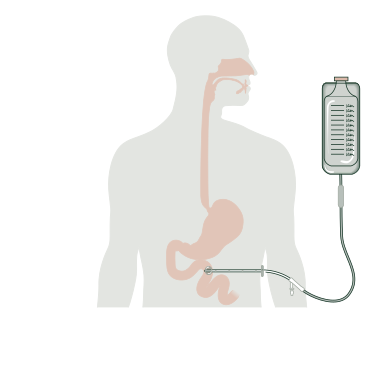
G tube vs J tube vs GJ tube: what's the difference?
A plain-language comparison of G, J, and GJ feeding tubes — where each one delivers food, how they're fed, and why your care team might choose one over another.
Reviewed by the Lugano Health team
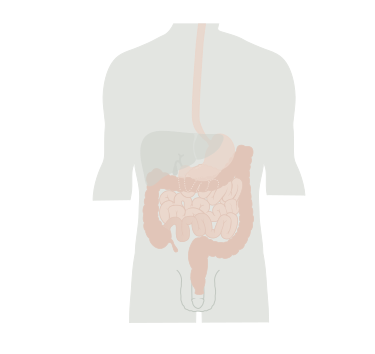
The difference between a G, J, and GJ tube is where the food ends up. A G tube feeds into your stomach, a J tube feeds past the stomach into the small intestine (jejunum), and a GJ tube can reach both. J and GJ tubes are used when the stomach needs to be bypassed. Your care team chooses based on how well your stomach works and your overall situation.
- The destination is the difference: G feeds the stomach, J feeds the small intestine, GJ can reach both.
- G tubes usually allow bolus (meal-style) or continuous feeds; J tubes almost always need slow, continuous feeding.
- J and GJ tubes are chosen when the stomach can't be used safely — for example, severe reflux or slow emptying.
- There's no single 'best' tube; the right one depends on your anatomy and needs — a decision for your care team.
If someone has mentioned a G tube, a J tube, and a GJ tube in the same breath, the letters can blur together fast. Here's the one idea that makes all three click: the difference is where the food ends up. Once you know the destination, the rest follows.
The one thing that separates them
Think of your digestive path as stomach first, small intestine next.
- A G tube (gastrostomy) delivers food into your stomach.
- A J tube (jejunostomy) delivers food past the stomach, into the small intestine (the jejunum).
- A GJ tube (gastrojejunostomy) is one device that can reach both — the stomach and the small intestine.
That single difference — the destination — drives almost everything else, including how you feed.
Why the destination changes how you feed
Your stomach works like a holding tank. It receives a meal, then releases it into the intestine a little at a time. That's why a G tube can often handle bolus feeds — larger amounts given over a few minutes, more like a meal.
The small intestine has no such tank. So a J tube usually needs slow, continuous feeding with a pump, delivered gently over hours. Feeding a J tube too quickly can cause cramping or diarrhea. Your dietitian sets your rate and schedule — never speed up a J-tube feed on your own.
Feed method, rate, and volume all depend on your tube and your body. Your care team and dietitian decide what's right for you — this page explains the general picture, not your plan.
Quick comparison
| G tube | J tube | GJ tube | |
|---|---|---|---|
| Where it feeds | Stomach | Small intestine (jejunum) | Both stomach + small intestine |
| Typical feed style | Bolus or continuous | Continuous (pump) | Continuous into the J port; stomach port often used to vent |
| Common reasons | Longer-term feeding when the stomach works well | Stomach must be bypassed (reflux, slow emptying, aspiration risk) | Need to vent the stomach and feed the intestine |
| Good to know | Most familiar, most flexible | Slower feeds; keep it clear with regular flushes | One site, two internal ports |
What this means day to day
- G tube: the most flexible option. Many people do meal-style feeds and have more freedom in their schedule.
- J tube: feeds are gentler and longer, often overnight or across much of the day. Because the tube is narrow and feeds run slowly, staying on top of flushing matters.
- GJ tube: combines both jobs. It can be a real relief for people who need stomach drainage and intestinal feeding together.
For a full tour of every tube type, see Types of feeding tubes explained. And if you're weighing G-tube specifics, PEG tube vs G tube breaks down that pair.
When to call your care team
Reach out if you notice:
- The tube won't flush or you feel strong resistance
- New or worsening cramping, diarrhea, nausea, or a swollen belly during feeds
- Leaking around the tube, or the tube has moved or come out
- Redness, swelling, warmth, or new pain at the site
A J or GJ tube that comes out is time-sensitive, because the tract into the small intestine can close quickly — contact your team right away.
Want the ground-level basics first? Start with Feeding tubes made simple.
Frequently asked questions
- Types of enteral access devices — American Society for Parenteral and Enteral Nutrition (ASPEN)
- Understanding your feeding tube — The Oley Foundation
This article is educational and is not medical advice. Every person and every tube is different — always follow the instructions of your own care team, and call them (or emergency services) if something feels wrong.