What is a J tube? (jejunostomy, explained)
A plain-language explanation of J tubes — a feeding tube that delivers nutrition past the stomach into the small intestine, why it's used, and how care differs.
Reviewed by the Lugano Health team
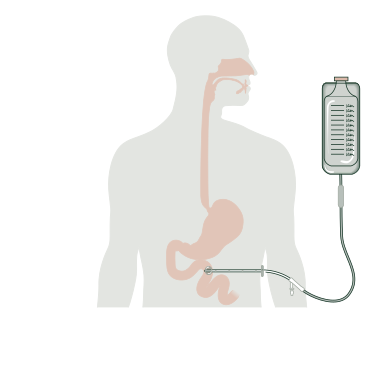
A J tube (jejunostomy tube) is a feeding tube that delivers nutrition past the stomach directly into the small intestine, called the jejunum. It's used when the stomach needs to be bypassed — for example, with severe reflux, aspiration risk, or a stomach that empties poorly. Because the small intestine can't hold large amounts at once, J tube feeds are usually given slowly and continuously by pump rather than as large boluses.
- A J tube feeds directly into the small intestine (jejunum), bypassing the stomach.
- It's used when the stomach must be skipped — reflux, aspiration risk, or slow emptying.
- Feeds are usually slow and continuous by pump, not large boluses.
- J tubes clog easily, so regular flushing is especially important.
If your care team has mentioned a J tube, it can feel like new territory. The idea is simpler than the name — it's a feeding tube that takes a slightly different route, and once you know why, the day-to-day care makes sense.
What "J tube" means
J tube is short for jejunostomy tube:
- Jejuno — the jejunum, a middle section of the small intestine.
- -ostomy — an opening.
So a J tube delivers nutrition, fluids, and medicine through a small opening straight into the small intestine, skipping the stomach entirely.
How it's different from a G tube
The key difference is where the feed lands:
- A G tube feeds into the stomach.
- A J tube feeds past the stomach, into the small intestine.
That one change shapes almost everything about how feeds are given. The stomach can comfortably handle larger, faster feeds; the small intestine can't. For a fuller comparison, see G tube vs J tube. Some people have a combination tube that does both — see What is a GJ tube?.
Why a J tube is used
A J tube is chosen when the stomach needs to be bypassed, such as with:
- Severe reflux that a stomach tube can't manage
- A high risk of aspiration (breathing feed into the lungs)
- A stomach that empties too slowly, so food would sit too long
Feeding past the stomach can lower these risks and make feeds more comfortable. A J tube can be a longer-term solution, and for some people it's a step taken after a stomach tube didn't work out — your care team will explain why it fits your situation.
How feeds work with a J tube
This is the part that surprises people most.
The small intestine can't hold a large amount at once like the stomach can. J tube feeds are usually given slowly and continuously by pump. Large, fast (bolus) feeds can cause cramping and diarrhea — only give them if your care team specifically tells you to.
Because feeds run slowly, many people use a pump on a schedule their team sets. Your team will tell you the rate and amount that's right for you. It can take a little time for your body to adjust to feeds in the small intestine, so your team may start low and build up gradually. Going slowly at first helps prevent cramping and keeps feeds comfortable.
Flushing matters even more
J tubes are long and thin, so they clog more easily than a wider stomach tube. Regular flushing is the single best habit for keeping yours clear:
- Flush with water before and after feeds and medicines.
- Push gently — never force against strong resistance.
- Use the amount your care team gave you (for adults this is often around 1-2 oz (30-60 mL), but always follow your team).
For the full routine, see How to flush a feeding tube.
When to call your care team
Reach out promptly if you notice:
- The tube won't flush, or you feel strong resistance
- The tube has moved, come out, or looks out of position — internal placement matters, so treat this as time-sensitive
- Redness, swelling, warmth, leaking, or new pain at the site
- Cramping, diarrhea, nausea, or vomiting during or after feeds
When something feels off, it's always okay to call. New to all of this? Start with Feeding tubes made simple.
Frequently asked questions
- Enteral access and tube feeding — patient resources — American Society for Parenteral and Enteral Nutrition (ASPEN)
- Home tube feeding — education and peer support — The Oley Foundation
This article is educational and is not medical advice. Every person and every tube is different — always follow the instructions of your own care team, and call them (or emergency services) if something feels wrong.