Getting a PEG or G tube: what to expect
What to expect before, during, and after PEG or G tube placement — how the decision is made, the short procedure, recovery, and when to call your care team.
Reviewed by the Lugano Health team
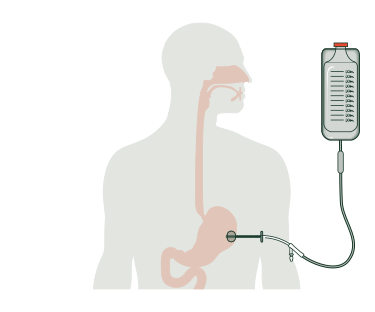
Getting a PEG or G tube is usually a short procedure, often under an hour, done with light sedation rather than major surgery. A doctor places the tube through a small opening in your abdomen so nutrition, fluids, and medicine can go straight to your stomach. Expect some soreness for a few days, and your care team will tell you when feeds can safely start.
- Placement is a short procedure — often under an hour — with light sedation, not major surgery.
- Some soreness around the site for a few days is normal and settles as it heals.
- Your care team decides when feeds start — usually within a day or so, on their schedule.
- Daily life becomes flushing, site care, and feeds — routines you'll pick up quickly.
If you've been told you're getting a PEG or G tube, it's normal to feel uneasy about the unknown parts. The good news: this is a well-understood, everyday procedure, and knowing what happens step by step takes a lot of the worry out of it.
Why a PEG or G tube gets recommended
A PEG or G tube is usually suggested when eating by mouth isn't giving you enough nutrition or isn't safe — and when that's expected to last more than a few weeks. It gives a reliable way to get food, fluids, and medicine straight into your stomach.
The decision is made with your care team, and it's yours to understand and agree to. It's fair to ask why it's recommended now, what the alternatives are, and how long they expect you to need it. If you're still learning the basics, start with What is a PEG tube? and What is a G tube?.
Getting ready
Your team will give you specific prep instructions, which usually include:
- Not eating or drinking for several hours beforehand
- A quick review of your medicines, especially blood thinners
- Arranging a ride home, since sedation can leave you drowsy
Bring your questions written down. It's easy to forget them in the moment.
What happens on the day
Placement itself is short. Here's the shape of it.
What happens on the day
Check in and get comfortable
You'll change, and the team will place a small IV and check your details.
This is a good moment to mention any allergies or worries.
The first few days
Some soreness around the site for a few days is normal, much like any small wound. Your team can help you stay comfortable. You may notice a little clear or slightly pink drainage early on, which usually settles.
Feeds don't always start right away. Your care team decides when and how much — often within a day or so, starting slowly and building up as your body adjusts. Don't start feeds on your own; wait for their go-ahead.
The first few weeks
As the site heals, you'll settle into a rhythm. Day-to-day life mostly comes down to a few repeatable routines:
- Flushing water before and after feeds and medicines — see How to flush a feeding tube.
- Site care — keeping the skin around the tube clean and dry. See Caring for your feeding tube site.
- Feeds on your team's schedule.
Go gently with lifting and strenuous activity until your team says the site has healed. Many people are surprised how quickly it becomes second nature.
When to call your care team
Reach out promptly if you notice:
- Spreading redness, swelling, warmth, or new pain at the site
- Fever, or the skin around the tube looks worse rather than better
- Leaking around the tube, or the tube has moved or come out
- Bleeding, persistent nausea or vomiting, or a hard, swollen belly
Trust your instincts. If something feels wrong, it's always okay to call.
New to all of this? Start with Feeding tubes made simple — you'll get the hang of a PEG or G tube faster than you expect.
Frequently asked questions
- Tube feeding at home — patient resources — American Society for Parenteral and Enteral Nutrition (ASPEN)
- Education and peer support for home tube feeding — The Oley Foundation
This article is educational and is not medical advice. Every person and every tube is different — always follow the instructions of your own care team, and call them (or emergency services) if something feels wrong.